


Written by Enrique Cortinas Social Media Manager
August 10, 2026










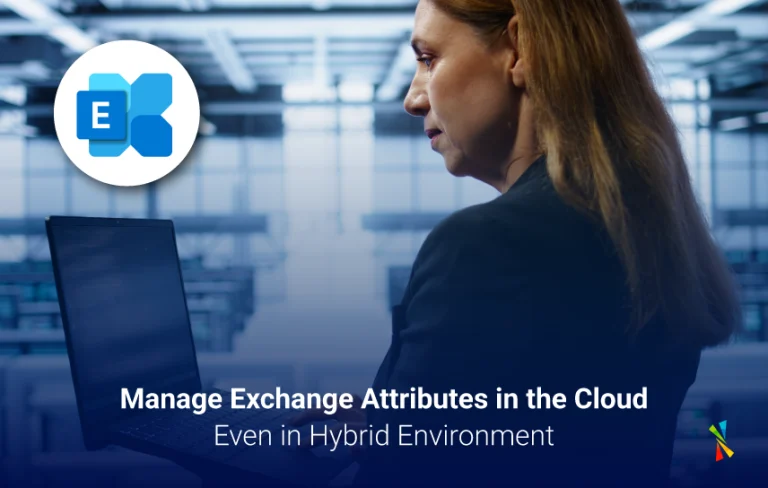
Microsoft has introduced a new way to manage Exchange attributes directly in the cloud for hybrid environments. For organizations that migrated mailboxes to Microsoft 365 a while ago but kept a server running in the background, this is worth paying attention to. It directly affects one of the biggest reasons that server is still turned on.
We have had several clients ask us about this recently, so we wanted to put together a clear explanation: what this new capability is, how it connects to retiring your last Exchange Server, and what to check before you shut anything down.
Up to now, even if your mailboxes were fully hosted in Exchange Online, certain Exchange attributes still had to be managed through your on-premises Exchange Server. Things like custom attributes, hidden-from-address-list settings, or proxy addresses would get updated on-prem, then synced to the cloud. That meant keeping a server around just to make those changes, even long after the actual migration was done.
Microsoft’s update shifts what they call the “Source of Authority” for these Exchange-specific attributes to the cloud. In practice, that means you can update them directly in Exchange Online, without touching on-premises Active Directory. Identity attributes like name, title, and phone number are not part of this change; those stay managed on-premises.
Plan, deploy and/or optimize your cloud, hybrid, or on-premises environment
If your last Exchange Server is only still running because of attribute management, this removes that dependency. It does not replace every function that server handles, so it is worth reviewing what else might be tied to it before making any decisions. But for many organizations, this closes one of the last gaps standing between “migrated” and “fully decommissioned”.
This capability addresses attribute management, but a last Exchange Server can be doing other work too, things like SMTP relay, or other services layered over the years. Before decommissioning, it is worth taking inventory of what that server is actually responsible for.
If you are not sure what that looks like for your environment, or want a second set of eyes before you move forward, reach out to our team. We are happy to walk through it with you.
Get news, updates, and insights about Microsoft solutions, technologies, and best practices.