
Microsoft-Funded Azure Cloud Migration Assessment
Help your organization detect risks, gain insights for optimization, and reduce your IT cost complexity
Migrate seamlessly to Azure with this cloud migration readiness evaluation

Obtain data-driven insights of your environment to identify opportunities and needs for your future Azure infrastructure, as well as paths to modernize your Azure footprint

Build a cost-effective Azure plan for your organization, based on our recommendations, by removing redundancies, and ensuring that what you have is what you need

to produce a thorough 360-degree view of your environment.

environment

insights

for optimization
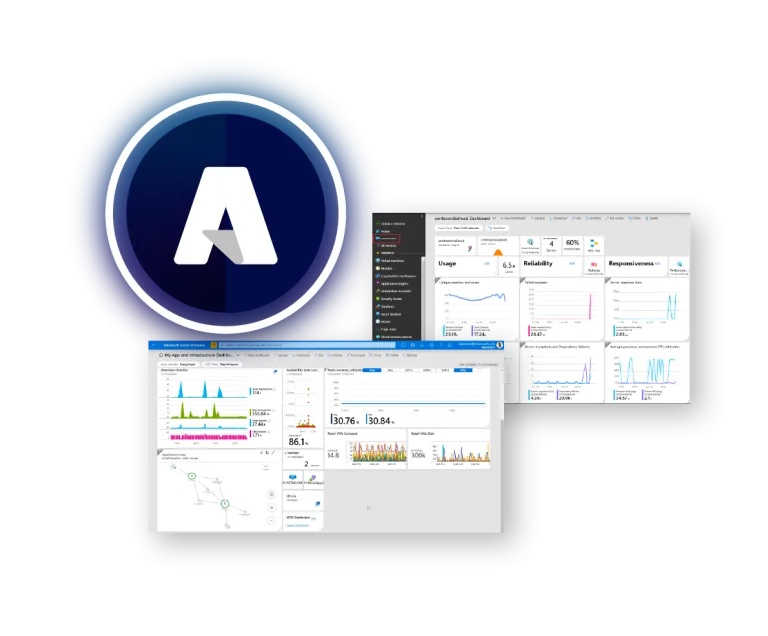
Benefits of this Azure Migration Assessment
- Maximize your investment with a comprehensive IT asset discovery and analysis
- Improve your organization’s IT health based on your business’ requirements
- Receive an actionable roadmap to mitigate risks, drive optimization and modernization, as well as to reduce the cost and complexity of your IT footprint
- Be sure of the security and confidentiality of your data throughout the evaluation, since your data is destroyed once it’s concluded

Team Venti built a relationship with us and through several projects I got to understand the value and saw the quality of their work
Nate Fyie
Frequently Asked Questions
What are the requirements for migrating to the Azure Cloud?
Migrating to the Azure Cloud is a significant undertaking for any organization, and careful planning and preparation are essential for a successful transition. Here are the key requirements and considerations for an organization to migrate to the cloud:
- Clear Objectives and Strategy
- Skills and Training
- Assessment and Readiness
- Security and Compliance
- Cost Analysis and Budgeting
- Data Migration Strategy
- Selecting Cloud Service Providers
- Migration Plan
- Testing and Validation
- Monitoring, management, and optimization
- Backup and Disaster Recovery
- Documentation and Governance
What are the prerequisites for an Azure migration assessment?
- Clear Goals: Define your migration objectives and business reasons.
- Inventory: Create a detailed inventory of IT assets, applications, and data.
- Data Classification: Categorize data by sensitivity and compliance requirements.
- Application Analysis: Document application details, dependencies, and criticality.
- Infrastructure Review: Understand your current on-premises infrastructure.
- Network Assessment: Evaluate network capacity and connectivity.
- Security and Compliance: Identify security and compliance needs.
- Resource Allocation: Allocate skilled personnel for the assessment.
- Backup and Disaster Recovery Plans: Review existing recovery plans.
- Data Migration: Understand data migration tools and processes.
Not sure if your environment is ready for Azure? Contact one of our agents and let us guide your organization through the Microsoft Cloud.
What key factors should organizations consider when migrating to Azure?
While there are many possible considerations when deciding to start an Azure migration. However, there are certain key points one should not take for granted. Following Microsoft’s best practices, such as:
- Azure Cloud Adoption Framework: Use Microsoft’s CAF for structured cloud adoption, offering best practices, guidance, and tools.
- Azure Assessment and Planning: Assess your current IT setup, define business goals, and create a migration plan with specific objectives, timelines, and resources.
- Azure Governance: Implement tailored governance, security, and networking policies. Address industry-specific compliance requirements.
- Azure Security and Identity: Ensure robust security with identity management, encryption, and threat detection, leveraging Azure Active Directory.
- Azure Resource Optimization: Optimize Azure resources for cost-effectiveness by right-sizing, using reserved instances, and monitoring usage.
- Azure Data Management: Develop a data strategy, including classification, retention policies, and data sovereignty. Use Azure services for analytics, storage, and databases.
- Azure Migration Methodology: Choose the right migration method (rehosting, refactoring, re-platforming, or rebuilding) for each workload. Test and mitigate potential issues.
- Consider Azure support options and managed services.
Team Venti, in collaboration with your organization, can facilitate a successful migration to Azure by following Microsoft’s best practices outlined in the Azure Cloud Adoption Framework. These considerations, based on the framework, provide a comprehensive roadmap for planning and executing your Azure migration while ensuring adherence to industry standards and best practices. For more information, please contact us, we are more than happy to help.
Is an Azure Migration Readiness assessment necessary before cloud migration?
An Azure migration assessment is a crucial step for organizations planning to transition to the cloud. It serves as the foundation for a successful migration by identifying potential risks, cost estimates, resource needs, and optimization opportunities.
Moreover, assessments help organizations tailor their migration strategies to meet security and compliance requirements, ensure application readiness, and plan for effective change management. By conducting a thorough assessment, organizations can minimize risks, budget accurately, and optimize their Azure environments, ultimately increasing the likelihood of a smooth and successful cloud migration.
What challenges could a company potentially face when migrating to Azure?
Migrating to Azure presents organizations with several challenges.
- Firstly, effective planning is paramount, and a rushed approach can lead to delays, unexpected costs, and unforeseen technical complexities. It’s vital to map out a detailed plan, identifying key data components and addressing risks proactively. A staggered approach is recommended instead of migrating all systems simultaneously, minimizing the chances of time-consuming errors.
- Secondly, careful application integration and compliance are essential. Each application typically relies on various integration points, including payment gateways, SMTP servers, and external storage. Ensuring scalability and compatibility with Azure demands a thorough assessment, possibly through a proof of concept (POC).
- Lastly, managing the transition can strain staff and resources. Departments must adapt to new procedures, potentially necessitating changes in roles and responsibilities. Migrating to the cloud is complex, requiring significant effort to synchronize and scale software and infrastructure.
Engaging with experts such as Team Venti can help your organization ease these burdens, ensuring a smoother post-migration experience.
What are the best practices for migrating to the Azure Cloud?
Assess
An important role in Azure migrations is understanding your environment correctly to build a coherent and comprehensive migration approach. During an evaluation, you can gain significative insights and decide your priorities.
Migrate
At Team Venti, our extensive experience enables us to provide a comprehensive Azure migration service aligned with Microsoft’s best practices. Your resources will be moved using powerful tools, while being guided with our experts’ help.
Optimize
Optimize your cloud resources, manage your applications effectively, enhance performance, maximize return on investment (ROI), and maintain compliance with organizational standards, all within the Azure environment.
Secure
Utilize Azure’s integrated services to enhance security measures and fine-tune the management of your migrated resources.
For more than a decade, Team Venti has assisted organizations at every stage of their Azure lifecycle, helping them leverage the full potential of Microsoft’s Cloud. Discover how we can help in your Azure journey. Talk with one of our experts today.
Successful projects start here!
Explore more resources

Cybersecurity: How to avoid risks during Cloud Migrations

Benefits of Azure migration
